
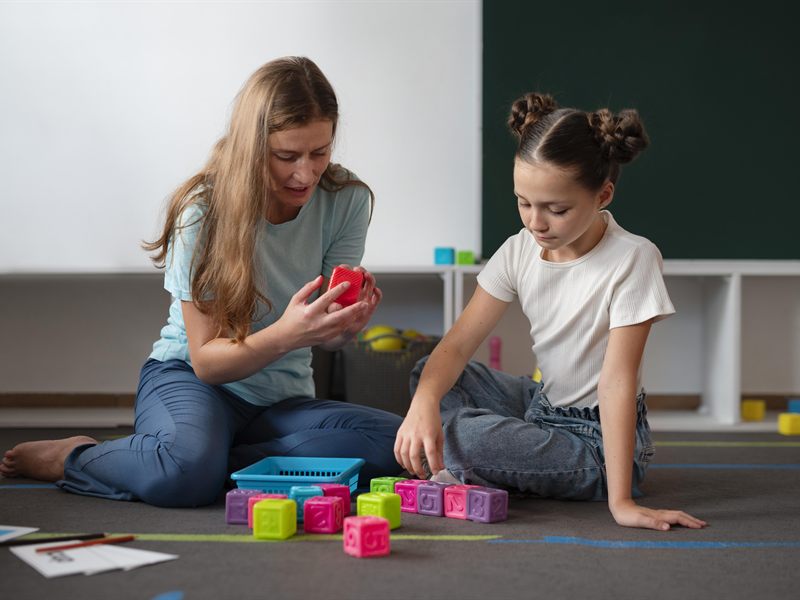
ABA starts with everyday life
Applied Behavior Analysis, often called ABA, is an evidence-based approach that helps people learn meaningful skills. For children, those skills can include communicating needs, taking part in daily routines, playing with others, building independence, and handling changes more comfortably.
Good ABA support begins with the individual child. A clinician learns about your child's strengths, needs, interests, and the routines that matter most to your family. The plan then focuses on practical goals that can make everyday life easier and more fulfilling.
Learning through support and practice
ABA therapy often breaks a larger skill into manageable steps, gives a child chances to practice, and uses encouragement that feels meaningful to them. Progress is measured so the team can see what is helping and adjust when something is not working.
Sessions should feel respectful and collaborative. Your child should have opportunities to make choices, communicate preferences, take breaks, and build skills in ways that fit their developmental needs.
Your goals guide the plan
Families are an essential part of the process. The goals you share about mornings, meals, school, outings, relationships, or independence help shape what the team works on first.
If you are considering ABA therapy, start with questions. Ask how goals are chosen, how progress is shared, and how your family will be involved. The right program should give you clear answers and make room for your perspective.
What individualized support can look like
Individualized does not mean unstructured. A team may begin by observing a routine, talking with caregivers, and identifying the skills that would make that routine easier. For a morning routine, that could mean following a short visual sequence, choosing clothes, packing a backpack, or moving from breakfast to the door with fewer reminders. Each family may choose a different starting point.
The support should fit the setting where it will be used. In-home ABA gives clinicians a chance to see familiar spaces and routines, then work with caregivers on strategies that are realistic for the household. As a skill becomes more comfortable, the team can consider how to practice it with other people and in other places, such as school, a store, or a playground.
Questions that help you understand a plan
Before starting services, ask how goals are selected, how your child's preferences will be included, and how progress will be reviewed. You can also ask what role a BCBA will have, how parent coaching will work, and what happens when a strategy is not helping. Clear answers make it easier to decide whether the approach fits your family.
A useful plan should connect the work in a session with a meaningful outcome in daily life. You should be able to recognize why a goal matters and what success might look like at home, school, or in the community. If a goal no longer fits, bring that up. Regular review is how support stays responsive to your child's needs and your family's priorities.