Notice the communication already happening
Communication is more than spoken words. A child may use a look, a gesture, a picture, a device, a sound, or a word to share what they need. Start by noticing the ways your child already reaches out, and respond as if their message matters—because it does.
When a child points to a snack, looks toward a favorite toy, or brings you an item, pause and name what you see. That response connects their action with a meaningful outcome and keeps the interaction moving forward.
Build communication into familiar routines
Daily routines create natural chances to practice. At breakfast, offer two choices. During play, hold a favorite item for a moment and wait for a look, gesture, sound, or word. On the way outside, talk through the next step together.
Keep the language simple and connected to what is happening. Repeating a useful word or short phrase in the moment is often more helpful than turning a routine into a quiz.
Make room for wait time
It can take a child longer to understand a question, decide what to say, or use their preferred communication method. After you offer a choice or make a comment, give a quiet pause before stepping in.
A speech-language pathologist or ABA clinician can help you choose strategies that fit your child. The goal is not to make every interaction perfect; it is to create more moments where your child is heard and understood.
Make everyday routines do some of the work
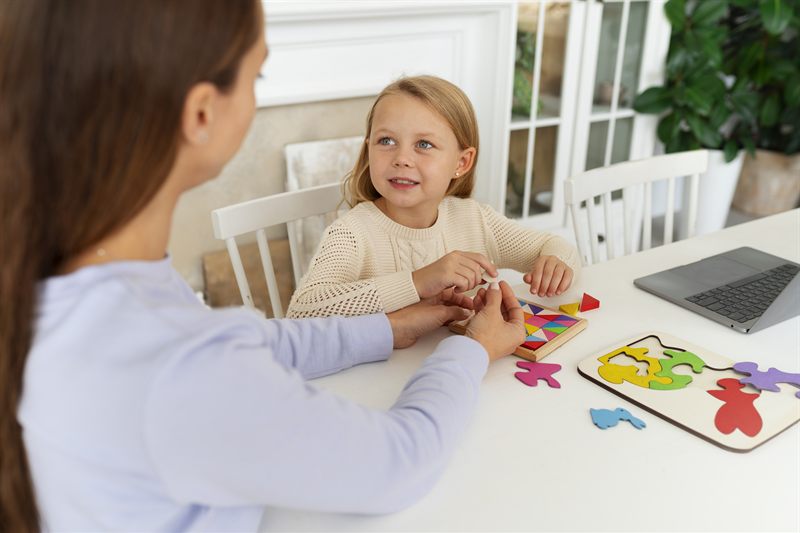
Choose a routine that already happens and has a natural reason for your child to communicate. During a snack, your child might choose between two foods, ask for help opening a container, or let you know when they are finished. During play, they might request another turn, show you something interesting, or decide what happens next. These small moments can add up without turning family time into a formal lesson.
Keep the language connected to the moment. Offer a meaningful choice, model a short phrase or gesture when needed, then allow time for your child to respond in their own way. If they do not respond, you can calmly help with the next step and try again later. The goal is to make communication useful and enjoyable, not to require a perfect response before your child receives support.
Notice patterns and share what you learn
Communication can look different depending on the place, people, noise level, and activity. Your child may be especially expressive during music, movement, cooking, or a favorite game. They may need more time in an unfamiliar setting. Brief notes about what helped, what was hard, and what your child seemed to enjoy can give a care team useful context for choosing home, school, or community supports.
If your child uses a communication device, pictures, signs, gestures, or spoken words, consistency across settings can make those tools easier to use. Parent support and training can help caregivers practice strategies in real routines, while school and community support can help extend useful approaches beyond home. The best approach is the one your child can use to be understood more often.